skip to main content

Associate of Occupational Science in Ultrasound Technology

Train for a Rewarding Career in Medical Imaging With Ultrasound Tech Training

20
months Earn your associate degree
ARRT (S)
certification prep
7/23/26
NEXT START DATE

Want more details about the Ultrasound Technologist program?

By submitting this form, I provide my signature, expressly consenting to calls, prerecorded messages, emails and/or texts regarding my educational options from American Career College using an automated dialing system to the number and email address provided. I understand my consent is not required to enroll at American Career College, and that I can withdraw my consent at any time. To request information without consenting, please call 877-832-0790. I also understand that I may revoke my consent at any time in accordance with ACC's Opt-Out Disclaimer. All information provided is subject to ACC's Privacy Policy. (**Standard rates may apply.)

Disclaimer Consumer Notice I understand that if I no longer wish to receive text messages from ACC, I may revoke my consent at any time by texting back "Stop" to unsubscribe from the service. I understand that if I no longer wish to receive emails, I may revoke my consent at any time by clicking the "Unsubscribe" link within any email I receive from ACC. I understand I may revoke my consent to receive calls by informing any ACC associate calling me that I no longer want to receive calls from ACC. Personal Information you submit through our Sites, such as your name, address and other contact information, may be collected by American Career College for internal marketing and development purposes as well as to respond to your inquiry, complete a transaction for you, or fulfill other forms of customer service. You can choose not to receive marketing from us by "unsubscribing" using the instructions in any marketing email you receive from us.

*Required

Earn your ultrasound technologist degree and learn how to use advanced imaging technology to support patient care.

Ultrasound Technologist Program

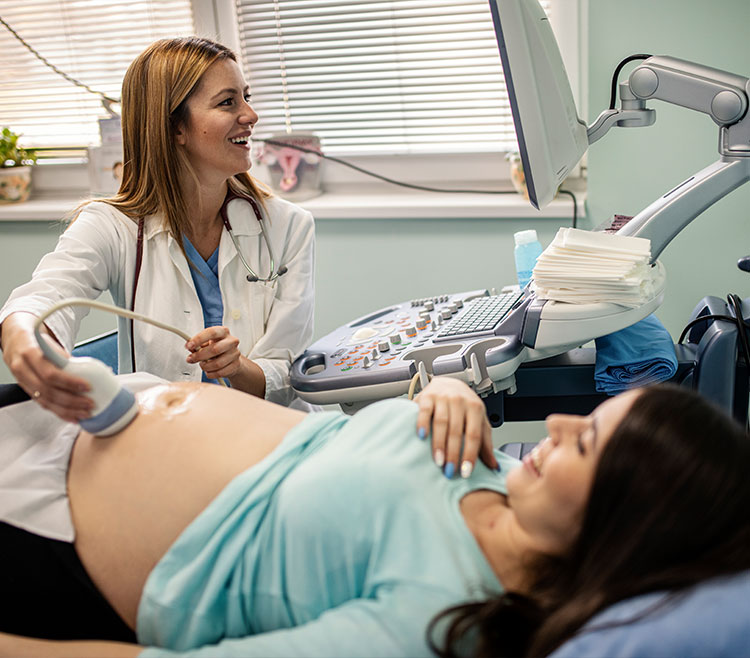
Ultrasound technologists use advanced imaging technology to help physicians examine organs, tissues, and blood flow inside the body. ACC’s Associate of Occupational Science in Ultrasound Technology program helps prepare students with the practical knowledge, hands-on training, and real-world clinical experience needed to perform diagnostic ultrasound procedures in healthcare settings.

Earn Your Degree In 20 Months

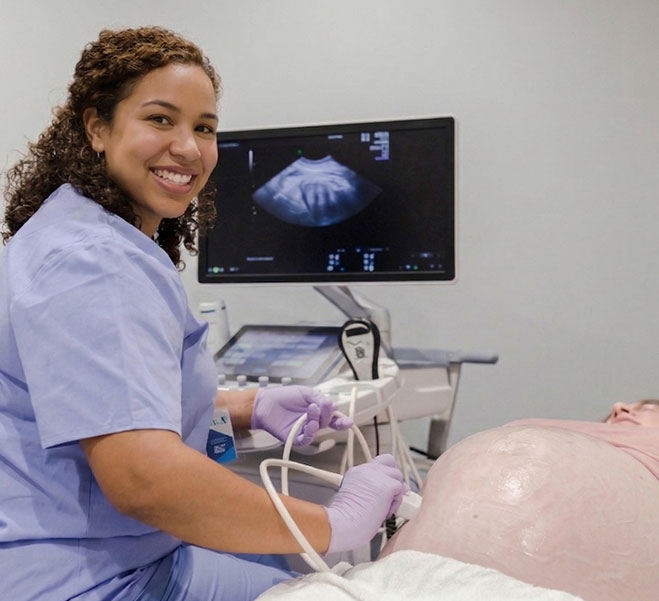
The 20-month Ultrasound Technologist program is designed to prepare graduates for entry-level roles in diagnostic medical sonography through classroom instruction, hands-on labs, and supervised clinical experience.

The program is offered at Orange County campus and is delivered in a blended format — combining online coursework with in-person training.

Request Info

Prepare for ARRT Certification

Throughout the program, students learn the principles of diagnostic medical sonography while developing scanning techniques used to produce diagnostic-quality images. Graduates earn an associate degree in ultrasound technology and may be eligible to sit for the American Registry of Radiologic Technologists (ARRT) certification exam in Sonography.
Apply Now Request Info Schedule a Tour

Info Session

In ACC's Ultrasound Technologist Program, You'll Learn to:

Learn to Perform Diagnostic Ultrasound Exams

Perform Diagnostic Ultrasound Exams

Learn scanning protocols used to evaluate abdominal organs, vascular structures, and reproductive anatomy.

Learn to Apply Imaging Anatomy and Pathology

Apply Imaging Anatomy and Pathology

Identify normal and abnormal sonographic findings while correlating clinical data with imaging results.

Learn to Support Patients During Imaging Procedures

Support Patients During Imaging Procedures

Communicate with patients, position them properly, and maintain professional standards of care.

Ultrasound Technologist Course List

Learn more about what's in store for you in the Ultrasound Technologist associate of occupational science degree program. For more on ultrasound technologist courses, visit the college catalog.

Term 1

Module Number

Title

Theory Hours

Skill Lab Hours

Clinical Hours

Total Hours

Quarter Credits

+ ANAT200 Introduction to Anatomy and Physiology 20 0 0 20 2.0

The purpose of this course is to understand the organization and general plan of the body and the importance of how the human body functions. This includes an introduction to the human body, chemical aspects of the life, cells, tissues, membranes, and the integumentary, skeletal, muscular, nervous, endocrine, cardiovascular, lymphatic, respiratory, digestive, urinary, and reproductive systems.

+ MATH100 College Mathematics I 40 0 0 40 4.0

This course will cover mathematical logic, Boolean algebra, set theory, number abstractions, operations and their properties, monomials, polynomials, equations and inequalities.

+ ANAT200-L Introduction to Anatomy and Physiology Lab 0 40 0 40 2.0

The purpose of this laboratory course is to develop an understanding of the organization and general plan of the body, maintaining homeostasis, and the importance of how the human body functions through applied and practical learning. Practical exposure to systems of study will include, but is not limited to: the study of cells and tissues, the integumentary, skeletal, muscular, nervous, endocrine, cardiovascular, lymphatic, respiratory, digestive, urinary, and reproductive systems. Concepts of development, metabolism, fluid and electrolyte balance, pregnancy, prenatal development, genetics and their impact on human movement and health are included. Laboratory learning activities will include identification of anatomical structures, surface anatomy, and their function and relationship to homeostasis.

+ ENGL100 Written Communications I 40 0 0 40 4.0

This course provides instruction in the process of effective written communication for a variety of formats. It initially focuses on four basic areas of effective writing: unity, specifics, coherence, and grammar. The course will utilize reading, discussion and personal insight to increase students capacity to write simple paragraphs, formal essays, reports and research projects. Students will be equipped with techniques that facilitate creative, academic, and professional written communication. Additionally, students will be given library activities to enhance research skills.

+ PHY101 General Introductory Physics 40 0 0 40 4.0

This is an introductory course covering the fundamental principles of the physical world. The course explores mechanics, thermodynamics, fluids, waves, electricity, magnetism, optics, and introductory atomic and nuclear physics.

Special focus is given to how physics concepts apply to health sciences and medical imaging, including diagnostic ultrasound, X-rays, and MRI. Through lectures, demonstrations, and problem-solving, students will develop critical thinking and scientific reasoning skills needed for real-world and clinical applications. By course end, students will have a strong physics foundation for further studies in ultrasound physics and advanced healthcare courses.


Totals

140

40

0

180

16.0

Term 2

Module Number

Title

Theory Hours

Skill Lab Hours

Clinical Hours

Total Hours

Quarter Credits

+ UT200 Ultrasound Physical Principles & Instrumentation‡ 100 40 0 140 12.0

This course covers the essential physical and technical principles underlying diagnostic medical sonography. Students will learn how sound waves generate diagnostic images by studying acoustic principles, wave interactions with tissues, pulsed ultrasound, Doppler principles, and transducer technology.

The course emphasizes ultrasound instrumentation, image processing, system controls, artifact recognition, quality assurance, and safety standards. In the lab, students gain hands-on experience operating equipment, mastering control settings, and optimizing image quality.

By course completion, students will be prepared for the ARDMS Sonography Principles and Instrumentation (SPI) exam.

+ UT250 Medical Terminology 40 0 0 40 4.0

This course is an introduction to basic medical imaging terminology and prepares students for more advanced coursework in subsequent courses by providing an introduction to general medical imaging terminology. Students will study the roots, prefixes, suffixes, and abbreviations as well as general terms and their appropriate usage in medical imaging practice.


Totals

140

40

0

180

16.0

Term 3

Module Number

Title

Theory Hours

Skill Lab Hours

Clinical Hours

Total Hours

Quarter Credits

+ UT300 Abdominal & Small Parts Ultrasound Imaging ‡ 80 80 0 160 12.0

This course covers the anatomy, physiology, and pathology of abdominal organs and superficial structures assessed by diagnostic medical sonography. Students will develop the knowledge and hands-on skills to perform quality abdominal and small parts ultrasound exams using standardized protocols.

Topics include the sonographic evaluation of the liver, gallbladder, pancreas, spleen, kidneys, bladder, major vessels, thyroid, scrotum, breast, and other superficial structures. The course emphasizes correlating clinical findings with sonographic appearances and identifying common pathologies.

In the lab, students will practice scanning techniques, image optimization, documentation, and preparation of preliminary findings. Professionalism, patient safety, and effective communication are stressed throughout.

Upon completion, students will be competent in abdominal and small parts scanning, image analysis, and clinical documentation, preparing them for advanced courses and clinical practice.

+ UT350 Patient Care ‡ 20 20 0 40 3.0

This course provides students with practical skills for sonography and effective patient care. The professional role of the sonographer, basic principles of medical ethics, patient care, and expectations in clinical settings are emphasized.

Key topics include communication, documentation, vital sign assessment, infection control, and the technologist’s responsibilities in medical emergencies. Students will also gain confidence using sonography equipment. Additionally, students will explore career pathways, licensure options, and the wide range of clinical applications in the field of sonography.


Totals

100

100

0

200

15.0

Term 4

Module Number

Title

Theory Hours

Skill Lab Hours

Clinical Hours

Total Hours

Quarter Credits

+ UT400 Obstetrics & Gynecology Ultrasound Imaging ‡ 80 80 0 160 12.0

This course introduces students to the fundamental principles and clinical applications of obstetric and gynecologic sonography. Students will gain an understanding of both normal and abnormal conditions affecting the female reproductive system and the developing fetus.

The lecture component focuses on the anatomy, physiology, and pathology of the uterus, ovaries, and fetal structures throughout various stages of pregnancy. Students will learn to correlate sonographic findings with clinical presentations and patient history to support accurate diagnostic interpretation.

In the laboratory component, students will develop hands-on proficiency in performing gynecologic and obstetric ultrasound examinations. Emphasis is placed on proper scanning techniques, image optimization, protocol adherence, and accurate documentation. Students will also practice obtaining biometric measurements, recognizing normal and abnormal fetal growth paterns, and preparing initial preliminary reports for review by the interpreting physician or radiologist.

By the end of the course, students will be equipped with the foundational knowledge and practical skills necessary for performing high-quality OB/GYN ultrasound examinations in a clinical setting.

+ UT450 Laws and Ethics in Imaging 20 0 0 20 2.0

This course introduces the medico-legal and medical ethics principles of the healthcare profession specific to the imaging profession.


Totals

100

80

0

180

14.0

Term 5

Module Number

Title

Theory Hours

Skill Lab Hours

Clinical Hours

Total Hours

Quarter Credits

+ UT500 Vascular Ultrasound Imaging ‡ 80 80 0 160 12.0

This course introduces vascular ultrasound imaging with a focus on hemodynamic principles and how vascular anatomy, physiology, and pathology affect ultrasound findings.

The lecture portion covers the anatomy and physiology of peripheral and central vessels and common vascular pathologies such as stenosis, occlusion, aneurysms, thrombosis, and venous insufficiency. Students learn to interpret related sonographic paterns.

Lab sessions offer hands-on training in vascular scanning and Doppler evaluation, including duplex studies of carotid arteries as well as arteries and veins in the upper and lower extremities. Emphasis is placed on image acquisition, waveform analysis, patient positioning, protocol adherence, and preliminary reporting.

Upon completion, students will be able to perform standard vascular ultrasound exams, recognize abnormal flow paterns, and contribute to accurate vascular diagnoses.

+ UT550L Ultrasound Exit Competencies 0 40 0 40 2.0

This course serves as the culminating capstone experience of the Ultrasound Technology Program. It is designed to assess each student’s readiness for professional practice and national certification examinations through hands-on demonstration of clinical proficiency.

This course reinforces clinical judgment, patient care, sonographic technique, and professional ethics, preparing students to enter the workforce as competent, confident, and credential-ready sonographers.


Totals

80

120

0

200

14.0

Term 6

Module Number

Title

Theory Hours

Skill Lab Hours

Clinical Hours

Total Hours

Quarter Credits

+ UT600C Clinical Practicum I 0 0 320 320 10.5

During this course, students will be assigned to, and directly supervised in a Diagnostic Medical Ultrasound imaging facility such as a hospital, clinic, or imaging center. The student will be introduced to the clinical setting and departmental organization. Under direct observation by a supervising sonographer or physician serving as the Clinical Instructor (preceptor), and the school’s Clinical Coordinator, the student will begin to acquire the hands-on skills necessary for the sonographer in a clinical site. This is accomplished through observation and participation in clinical case studies of patients undergoing ultrasound examinations.

+ UTP1 Physics Prep Course 40 0 0 40 4.0

This course provides a focused review of the fundamental and advanced concepts of ultrasound physics and instrumentation for sonography students preparing for the ARRT (S) exam. Topics include the principles of sound wave propagation, acoustic parameters, atenuation, image formation, Doppler principles, and common artifacts. Essential aspects of equipment operation, safety, and quality assurance are emphasized, alongside practical exam strategies. Learning activities combine lectures,

image review, and mock exams to ensure competency in sonography physics and readiness for the ARRT (S) certification test.


Totals

40

0

320

360

14.5

Term 7

Module Number

Title

Theory Hours

Skill Lab Hours

Clinical Hours

Total Hours

Quarter Credits

+ UT700C Clinical Practicum II 0 0 320 320 10.5

This course is designed as a more advanced continuation of Clinical Practicum I. The student will continue to perfect his/her skills in the clinical environment and learn more advanced imaging techniques required of the sonographer. The student will gain more experience in performing ultrasound imaging of the patient undergoing abdominal, small parts, gynecologic, obstetric, or vascular ultrasound examinations. The student will continue to develop skills with greater independence while supervised by the Clinical Instructor (preceptor), and the Clinical Coordinator.

+ UTP2 OB/GYN Preparation Course 40 0 0 40 4.0

This course provides an in-depth review of advanced obstetric and gynecologic sonography for ARRT (S) exam preparation. Emphasis is placed on female pelvic anatomy, fetal development across all trimesters, and recognition of various pathologies. Students practice image interpretation, protocol review, and clinical correlation through case studies and mock exams. The course equips students with the knowledge and test-taking skills needed for the ARRT (S) OB/GYN exam section.


Totals

40

0

320

360

14.5

Term 8

Module Number

Title

Theory Hours

Skill Lab Hours

Clinical Hours

Total Hours

Quarter Credits

+ UT800C Clinical Practicum III 0 0 320 320 10.5

This course is designed as a more advanced continuation of Clinical Practicum I and II. The student will continue to perfect his/her skills in the clinical environment and learn more advanced imaging techniques required of the sonographer. At this point, the student is expected to perform all ultrasound exams independently under Clinical Instructor (preceptor) observation and review. The student will gain more experience in performing ultrasound imaging of the patient undergoing abdominal, small parts, gynecologic, obstetric, or vascular ultrasound examinations.

+ UTP3 Abdominal Preparation Course 40 0 0 40 4.0

This course offers a comprehensive review of advanced abdominal sonography for ARRT (S) exam preparation, focusing on the sonographic appearance of normal anatomy, major abdominal organs, and various pathologies. Students practice image interpretation, case analysis, and scanning protocols, with an emphasis on clinical correlations and ARRT exam-style reasoning. Interactive activities and mock assessments ensure mastery of key concepts and test-taking strategies specific to the abdominal section of the ARRT (S) exam.


Totals

40

0

320

360

14.5

Term 1

+ Module Number: ANAT200 (View Description)

The purpose of this course is to understand the organization and general plan of the body and the importance of how the human body functions. This includes an introduction to the human body, chemical aspects of the life, cells, tissues, membranes, and the integumentary, skeletal, muscular, nervous, endocrine, cardiovascular, lymphatic, respiratory, digestive, urinary, and reproductive systems.

Title Introduction to Anatomy and Physiology
Theory Hours 20
Skill Lab Hours 0
Clinical Hours 0
Total Hours 20
Quarter Credits 2.0
+ Module Number: MATH100 (View Description)

This course will cover mathematical logic, Boolean algebra, set theory, number abstractions, operations and their properties, monomials, polynomials, equations and inequalities.

Title College Mathematics I
Theory Hours 40
Skill Lab Hours 0
Clinical Hours 0
Total Hours 40
Quarter Credits 4.0
+ Module Number: ANAT200-L (View Description)

The purpose of this laboratory course is to develop an understanding of the organization and general plan of the body, maintaining homeostasis, and the importance of how the human body functions through applied and practical learning. Practical exposure to systems of study will include, but is not limited to: the study of cells and tissues, the integumentary, skeletal, muscular, nervous, endocrine, cardiovascular, lymphatic, respiratory, digestive, urinary, and reproductive systems. Concepts of development, metabolism, fluid and electrolyte balance, pregnancy, prenatal development, genetics and their impact on human movement and health are included. Laboratory learning activities will include identification of anatomical structures, surface anatomy, and their function and relationship to homeostasis.

Title Introduction to Anatomy and Physiology Lab
Theory Hours 0
Skill Lab Hours 40
Clinical Hours 0
Total Hours 40
Quarter Credits 2.0
+ Module Number: ENGL100 (View Description)

This course provides instruction in the process of effective written communication for a variety of formats. It initially focuses on four basic areas of effective writing: unity, specifics, coherence, and grammar. The course will utilize reading, discussion and personal insight to increase students capacity to write simple paragraphs, formal essays, reports and research projects. Students will be equipped with techniques that facilitate creative, academic, and professional written communication. Additionally, students will be given library activities to enhance research skills.

Title Written Communications I
Theory Hours 40
Skill Lab Hours 0
Clinical Hours 0
Total Hours 40
Quarter Credits 4.0
+ Module Number: PHY101 (View Description)

This is an introductory course covering the fundamental principles of the physical world. The course explores mechanics, thermodynamics, fluids, waves, electricity, magnetism, optics, and introductory atomic and nuclear physics.

Special focus is given to how physics concepts apply to health sciences and medical imaging, including diagnostic ultrasound, X-rays, and MRI. Through lectures, demonstrations, and problem-solving, students will develop critical thinking and scientific reasoning skills needed for real-world and clinical applications. By course end, students will have a strong physics foundation for further studies in ultrasound physics and advanced healthcare courses.

Title General Introductory Physics
Theory Hours 40
Skill Lab Hours 0
Clinical Hours 0
Total Hours 40
Quarter Credits 4.0

TOTALS

Theory Hours

140

Skill Lab Hours

40

Clinical Hours

0

Total Hours<

180

Quarter Credits

16.0

Term 2

+ Module Number: UT200 (View Description)

This course covers the essential physical and technical principles underlying diagnostic medical sonography. Students will learn how sound waves generate diagnostic images by studying acoustic principles, wave interactions with tissues, pulsed ultrasound, Doppler principles, and transducer technology.

The course emphasizes ultrasound instrumentation, image processing, system controls, artifact recognition, quality assurance, and safety standards. In the lab, students gain hands-on experience operating equipment, mastering control settings, and optimizing image quality.

By course completion, students will be prepared for the ARDMS Sonography Principles and Instrumentation (SPI) exam.

Title Ultrasound Physical Principles & Instrumentation‡
Theory Hours 100
Skill Lab Hours 40
Clinical Hours 0
Total Hours 140
Quarter Credits 12.0
+ Module Number: UT250 (View Description)

This course is an introduction to basic medical imaging terminology and prepares students for more advanced coursework in subsequent courses by providing an introduction to general medical imaging terminology. Students will study the roots, prefixes, suffixes, and abbreviations as well as general terms and their appropriate usage in medical imaging practice.

Title Medical Terminology
Theory Hours 40
Skill Lab Hours 0
Clinical Hours 0
Total Hours 40
Quarter Credits 4.0

TOTALS

Theory Hours

140

Skill Lab Hours

40

Clinical Hours

0

Total Hours<

180

Quarter Credits

16.0

Term 3

+ Module Number: UT300 (View Description)

This course covers the anatomy, physiology, and pathology of abdominal organs and superficial structures assessed by diagnostic medical sonography. Students will develop the knowledge and hands-on skills to perform quality abdominal and small parts ultrasound exams using standardized protocols.

Topics include the sonographic evaluation of the liver, gallbladder, pancreas, spleen, kidneys, bladder, major vessels, thyroid, scrotum, breast, and other superficial structures. The course emphasizes correlating clinical findings with sonographic appearances and identifying common pathologies.

In the lab, students will practice scanning techniques, image optimization, documentation, and preparation of preliminary findings. Professionalism, patient safety, and effective communication are stressed throughout.

Upon completion, students will be competent in abdominal and small parts scanning, image analysis, and clinical documentation, preparing them for advanced courses and clinical practice.

Title Abdominal & Small Parts Ultrasound Imaging ‡
Theory Hours 80
Skill Lab Hours 80
Clinical Hours 0
Total Hours 160
Quarter Credits 12.0
+ Module Number: UT350 (View Description)

This course provides students with practical skills for sonography and effective patient care. The professional role of the sonographer, basic principles of medical ethics, patient care, and expectations in clinical settings are emphasized.

Key topics include communication, documentation, vital sign assessment, infection control, and the technologist’s responsibilities in medical emergencies. Students will also gain confidence using sonography equipment. Additionally, students will explore career pathways, licensure options, and the wide range of clinical applications in the field of sonography.

Title Patient Care ‡
Theory Hours 20
Skill Lab Hours 20
Clinical Hours 0
Total Hours 40
Quarter Credits 3.0

TOTALS

Theory Hours

100

Skill Lab Hours

100

Clinical Hours

0

Total Hours<

200

Quarter Credits

15.0

Term 4

+ Module Number: UT400 (View Description)

This course introduces students to the fundamental principles and clinical applications of obstetric and gynecologic sonography. Students will gain an understanding of both normal and abnormal conditions affecting the female reproductive system and the developing fetus.

The lecture component focuses on the anatomy, physiology, and pathology of the uterus, ovaries, and fetal structures throughout various stages of pregnancy. Students will learn to correlate sonographic findings with clinical presentations and patient history to support accurate diagnostic interpretation.

In the laboratory component, students will develop hands-on proficiency in performing gynecologic and obstetric ultrasound examinations. Emphasis is placed on proper scanning techniques, image optimization, protocol adherence, and accurate documentation. Students will also practice obtaining biometric measurements, recognizing normal and abnormal fetal growth paterns, and preparing initial preliminary reports for review by the interpreting physician or radiologist.

By the end of the course, students will be equipped with the foundational knowledge and practical skills necessary for performing high-quality OB/GYN ultrasound examinations in a clinical setting.

Title Obstetrics & Gynecology Ultrasound Imaging ‡
Theory Hours 80
Skill Lab Hours 80
Clinical Hours 0
Total Hours 160
Quarter Credits 12.0
+ Module Number: UT450 (View Description)

This course introduces the medico-legal and medical ethics principles of the healthcare profession specific to the imaging profession.

Title Laws and Ethics in Imaging
Theory Hours 20
Skill Lab Hours 0
Clinical Hours 0
Total Hours 20
Quarter Credits 2.0

TOTALS

Theory Hours

100

Skill Lab Hours

80

Clinical Hours

0

Total Hours<

180

Quarter Credits

14.0

Term 5

+ Module Number: UT500 (View Description)

This course introduces vascular ultrasound imaging with a focus on hemodynamic principles and how vascular anatomy, physiology, and pathology affect ultrasound findings.

The lecture portion covers the anatomy and physiology of peripheral and central vessels and common vascular pathologies such as stenosis, occlusion, aneurysms, thrombosis, and venous insufficiency. Students learn to interpret related sonographic paterns.

Lab sessions offer hands-on training in vascular scanning and Doppler evaluation, including duplex studies of carotid arteries as well as arteries and veins in the upper and lower extremities. Emphasis is placed on image acquisition, waveform analysis, patient positioning, protocol adherence, and preliminary reporting.

Upon completion, students will be able to perform standard vascular ultrasound exams, recognize abnormal flow paterns, and contribute to accurate vascular diagnoses.

Title Vascular Ultrasound Imaging ‡
Theory Hours 80
Skill Lab Hours 80
Clinical Hours 0
Total Hours 160
Quarter Credits 12.0
+ Module Number: UT550L (View Description)

This course serves as the culminating capstone experience of the Ultrasound Technology Program. It is designed to assess each student’s readiness for professional practice and national certification examinations through hands-on demonstration of clinical proficiency.

This course reinforces clinical judgment, patient care, sonographic technique, and professional ethics, preparing students to enter the workforce as competent, confident, and credential-ready sonographers.

Title Ultrasound Exit Competencies
Theory Hours 0
Skill Lab Hours 40
Clinical Hours 0
Total Hours 40
Quarter Credits 2.0

TOTALS

Theory Hours

80

Skill Lab Hours

120

Clinical Hours

0

Total Hours<

200

Quarter Credits

14.0

Term 6

+ Module Number: UT600C (View Description)

During this course, students will be assigned to, and directly supervised in a Diagnostic Medical Ultrasound imaging facility such as a hospital, clinic, or imaging center. The student will be introduced to the clinical setting and departmental organization. Under direct observation by a supervising sonographer or physician serving as the Clinical Instructor (preceptor), and the school’s Clinical Coordinator, the student will begin to acquire the hands-on skills necessary for the sonographer in a clinical site. This is accomplished through observation and participation in clinical case studies of patients undergoing ultrasound examinations.

Title Clinical Practicum I
Theory Hours 0
Skill Lab Hours 0
Clinical Hours 320
Total Hours 320
Quarter Credits 10.5
+ Module Number: UTP1 (View Description)

This course provides a focused review of the fundamental and advanced concepts of ultrasound physics and instrumentation for sonography students preparing for the ARRT (S) exam. Topics include the principles of sound wave propagation, acoustic parameters, atenuation, image formation, Doppler principles, and common artifacts. Essential aspects of equipment operation, safety, and quality assurance are emphasized, alongside practical exam strategies. Learning activities combine lectures,

image review, and mock exams to ensure competency in sonography physics and readiness for the ARRT (S) certification test.

Title Physics Prep Course
Theory Hours 40
Skill Lab Hours 0
Clinical Hours 0
Total Hours 40
Quarter Credits 4.0

TOTALS

Theory Hours

40

Skill Lab Hours

0

Clinical Hours

320

Total Hours<

360

Quarter Credits

14.5

Term 7

+ Module Number: UT700C (View Description)

This course is designed as a more advanced continuation of Clinical Practicum I. The student will continue to perfect his/her skills in the clinical environment and learn more advanced imaging techniques required of the sonographer. The student will gain more experience in performing ultrasound imaging of the patient undergoing abdominal, small parts, gynecologic, obstetric, or vascular ultrasound examinations. The student will continue to develop skills with greater independence while supervised by the Clinical Instructor (preceptor), and the Clinical Coordinator.

Title Clinical Practicum II
Theory Hours 0
Skill Lab Hours 0
Clinical Hours 320
Total Hours 320
Quarter Credits 10.5
+ Module Number: UTP2 (View Description)

This course provides an in-depth review of advanced obstetric and gynecologic sonography for ARRT (S) exam preparation. Emphasis is placed on female pelvic anatomy, fetal development across all trimesters, and recognition of various pathologies. Students practice image interpretation, protocol review, and clinical correlation through case studies and mock exams. The course equips students with the knowledge and test-taking skills needed for the ARRT (S) OB/GYN exam section.

Title OB/GYN Preparation Course
Theory Hours 40
Skill Lab Hours 0
Clinical Hours 0
Total Hours 40
Quarter Credits 4.0

TOTALS

Theory Hours

40

Skill Lab Hours

0

Clinical Hours

320

Total Hours<

360

Quarter Credits

14.5

Term 8

+ Module Number: UT800C (View Description)

This course is designed as a more advanced continuation of Clinical Practicum I and II. The student will continue to perfect his/her skills in the clinical environment and learn more advanced imaging techniques required of the sonographer. At this point, the student is expected to perform all ultrasound exams independently under Clinical Instructor (preceptor) observation and review. The student will gain more experience in performing ultrasound imaging of the patient undergoing abdominal, small parts, gynecologic, obstetric, or vascular ultrasound examinations.

Title Clinical Practicum III
Theory Hours 0
Skill Lab Hours 0
Clinical Hours 320
Total Hours 320
Quarter Credits 10.5
+ Module Number: UTP3 (View Description)

This course offers a comprehensive review of advanced abdominal sonography for ARRT (S) exam preparation, focusing on the sonographic appearance of normal anatomy, major abdominal organs, and various pathologies. Students practice image interpretation, case analysis, and scanning protocols, with an emphasis on clinical correlations and ARRT exam-style reasoning. Interactive activities and mock assessments ensure mastery of key concepts and test-taking strategies specific to the abdominal section of the ARRT (S) exam.

Title Abdominal Preparation Course
Theory Hours 40
Skill Lab Hours 0
Clinical Hours 0
Total Hours 40
Quarter Credits 4.0

TOTALS

Theory Hours

40

Skill Lab Hours

0

Clinical Hours

320

Total Hours<

360

Quarter Credits

14.5


Program Overview

Ultrasound Technologist

Ultrasound Technologist Program Overview

In as little as 20 months, ACC’s Associate of Occupational Science in Ultrasound Technology program is designed to prepare students with the knowledge and clinical training needed to work in diagnostic medical sonography.

The curriculum combines general education courses, ultrasound imaging theory, hands-on laboratory training, and over 900 hours of real-world clinical experience. Students train to develop the skills needed to perform ultrasound examinations and produce images that assist physicians in diagnosing medical conditions.

Key areas of study include:

  • Anatomy and physiology
  • Ultrasound physics and instrumentation
  • Medical terminology
  • Abdominal and small parts sonography
  • Obstetrics and gynecology ultrasound imaging
  • Vascular ultrasound imaging
  • Patient care and professional practice

Students also complete multiple clinical practicum experiences, where they train in healthcare settings such as hospitals, clinics, or imaging centers under the supervision of experienced sonographers.

The goal of the Ultrasound Technologist program is to prepare graduates to:

  • Perform diagnostic sonographic examinations safely and effectively
  • Apply ultrasound physics and imaging principles to produce diagnostic-quality images
  • Communicate effectively with patients and healthcare professionals
  • Demonstrate professionalism and ethical practice in healthcare environments

Graduates receive an Associate of Occupational Science in Ultrasound Technology and may be eligible to pursue ARRT certification in Sonography.

Program Highlights

Highlights ACC's Program

Blended form (online and on campus)

Complete in as little as 20 months

Over 900 hours of real-world experience

On-campus labs

Eligibility for ARRT certification exam

Career services support

Financial aid and scholarships available for those who qualify

Graduate resources and alumni network

Accreditation

The Los Angeles, Anaheim, and Ontario campuses in California, along with the Dallas Fort-Worth, Texas campus, are institutionally accredited by the Accrediting Bureau of Health Education Schools (ABHES). ABHES 6116 Executive Blvd. Suite 730, North Bethesda, MD 20852; Phone (301) 291-7550 / Fax (703) 917-4109 / www.abhes.org

Prerequisites

To enroll in the Ultrasound Technologist program at ACC, applicants must:

  • Hold a high school diploma or GED equivalent
  • Pass an entrance exam
  • Meet with an Admissions Advisor

For full admission criteria, review ACC’s general college admission requirements.

Schedule a Tour

The Info You Need — All in One Place

Download the Ultrasound Technologist Program Brochure!

Looking for more information about what ACC's ultrasound tech training program has to offer? Our brochure has important details about the program including:


  • Program curriculum and course highlights
  • Enrollment requirements
  • And more!

Download the brochure to explore everything that ACC’s Ultrasound Technologist program has to offer and take the next step toward your future in healthcare.

From lectures to real-world experience, our ACC programs are designed with your career in mind.

Apply Now

From lectures to labs, our ACC curriculum is designed with you in mind.

FAQs

What is an ultrasound technologist?

An ultrasound technologist (also called a diagnostic medical sonographer) uses ultrasound imaging equipment to produce images of organs, tissues, and blood flow that assist physicians in diagnosing medical conditions.

How long is the Ultrasound Technologist program?

Students can earn their associate degree in ultrasound technology in as little as 20 months.

Is the ultrasound tech program offered online?

The program is delivered in a blended format, meaning some coursework is completed online while lab training and clinical experiences occur in person at our Orange County campus and local clinical sites.

What will I learn in the Ultrasound Technologist program?

Students learn ultrasound physics, imaging techniques, patient care practices, and how to perform diagnostic ultrasound exams in abdominal, vascular, and OB/GYN imaging.

Does the Ultrasound Technologist program prepare students for certification?

ACC’s ultrasound tech curriculum is designed to prepare graduates to pass the American Registry of Radiologic Technologists (ARRT) certification exam in Sonography (S).

How much does the Ultrasound Technologist program cost?

Our admissions advisors and financial aid advisors are here to support you. To learn more about ACC’s Ultrasound Technologist program cost, access our tuition info.

Is financial aid available for ultrasound technologist school?

Yes, financial aid and scholarships are available for those who qualify. An ACC Financial Aid Advisor can assist you in identifying options to help fund your education.

Ultrasound Technologist
Take the next step in your education.

With a blended learning format and hands-on training, the Ultrasound Technologist program helps students build the skills needed for a career in sonography.

Schedule a Tour

Career Guide

How to Become an Ultrasound Technologist in California

As an ultrasound tech, you’ll play an important role in helping detect and diagnose medical issues in patients so they can get proper treatment or care.

See Career Guide

Want more details about the Ultrasound Technologist program?

By submitting this form, I provide my signature, expressly consenting to calls, prerecorded messages, emails and/or texts regarding my educational options from American Career College using an automated dialing system to the number and email address provided. I understand my consent is not required to enroll at American Career College, and that I can withdraw my consent at any time. To request information without consenting, please call 877-832-0790. I also understand that I may revoke my consent at any time in accordance with ACC's Opt-Out Disclaimer. All information provided is subject to ACC's Privacy Policy. (**Standard rates may apply.)

Disclaimer Consumer Notice I understand that if I no longer wish to receive text messages from ACC, I may revoke my consent at any time by texting back "Stop" to unsubscribe from the service. I understand that if I no longer wish to receive emails, I may revoke my consent at any time by clicking the "Unsubscribe" link within any email I receive from ACC. I understand I may revoke my consent to receive calls by informing any ACC associate calling me that I no longer want to receive calls from ACC. Personal Information you submit through our Sites, such as your name, address and other contact information, may be collected by American Career College for internal marketing and development purposes as well as to respond to your inquiry, complete a transaction for you, or fulfill other forms of customer service. You can choose not to receive marketing from us by "unsubscribing" using the instructions in any marketing email you receive from us.

*Required

Voted Best Career College in the 2025 Inland Valley Daily Bulletin Readers Choice Awards

Ontario Campus: Voted Best Career College in the 2025 Inland Valley Daily Bulletin Readers Choice Awards.

Voted Best Career College in the 2025 LA Daily News Readers Choice Awards.

LA Campus: Voted Best Career College in the 2025 LA Daily News Readers Choice Awards.

Voted Best Career College in the 2025 San Gabriel Valley Tribune Readers Choice Awards.

OC Campus: Voted Best Career College in the 2025 San Gabriel Valley Tribune Readers Choice Awards.

Scroll to the top
Call Us