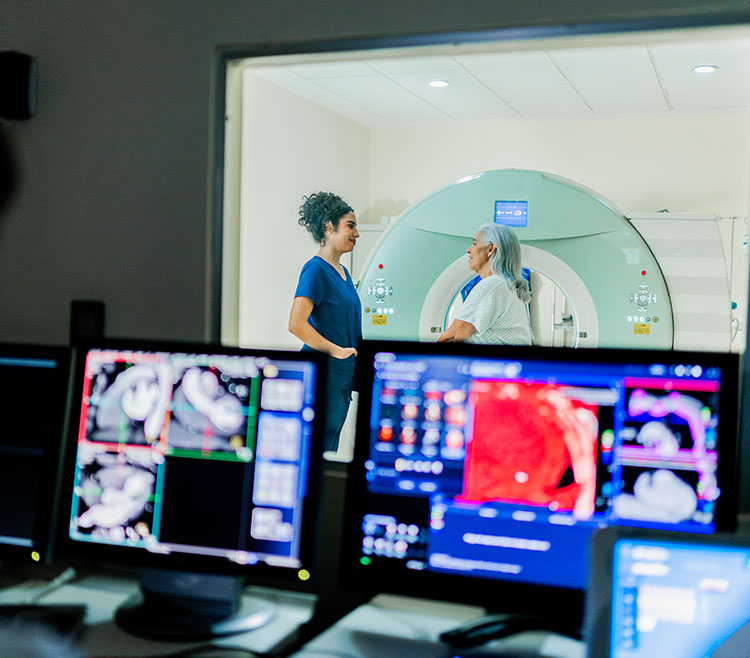
Magnetic Resonance Imaging (MRI) technologists combine advanced imaging technology with patient care to help physicians diagnose and monitor a wide range of medical conditions. Using powerful magnetic fields and radio waves, MRI technologists create detailed images of organs, tissues, and other structures within the body.
Whether you’re a student or graduate of ACC’s MRI Technologist program or someone considering this professional path, this overview guide covers what to expect when pursuing a career as an MRI technologist.
Review our career guide on how to become an MRI Technologist in California for a deeper dive.
MRI technologists work closely with radiologists, physicians, nurses, and other healthcare professionals to perform diagnostic imaging procedures. They are responsible for preparing patients, operating MRI equipment, ensuring safety protocols are followed, and producing high-quality images that help support medical decision-making.
Because MRI scanners use powerful magnetic fields, technologists must be highly knowledgeable about safety procedures and patient screening requirements.
Depending on certifications and specialization, you may encounter job titles such as:
*Certification and registration may be required or preferred.
An MRI technologist's responsibilities may vary depending on the facility and patient population. In general, MRI technologists may:
Effective MRI technologists often demonstrate the following skills:
For more information, see the O*NET Occupational Profile for Magnetic Resonance Imaging Technologists.
MRI technologist interviews often include both technical and patient-care questions. You may be asked:
Use examples from your clinical experiences to demonstrate your technical skills, professionalism, and patient-centered approach.
Professional organizations and certification bodies for ultrasound technologists include:
Many employers require ARRT certification in Magnetic Resonance Imaging. ACC's MRI Technologist program curriculum includes Registry Review courses designed to help students prepare for the ARRT MRI certification examination.
As your career progresses, you may choose to:
Your resume should include your MRI education, clinical training, certification status or eligibility, technical imaging skills, and patient care experience. Be sure to highlight MRI-specific competencies such as patient screening, safety procedures, anatomy knowledge, and image acquisition.
Requirements vary by employer and state, but many employers require certification through the American Registry of Radiologic Technologists (ARRT). Completing an accredited MRI program can help prepare you for certification eligibility.
MRI technologists typically work in hospitals, outpatient imaging centers, physician offices, specialty clinics, and diagnostic imaging facilities. Some technologists specialize in areas such as neurology, orthopedics, oncology, or cardiovascular imaging.
ACC's Career Services team offers resources such as resume reviews, interview preparation, career advising, employer networking opportunities, and job search support to help students transition from the classroom to the workforce.
ACC provides career guidance and assistance but cannot guarantee employment.
Ontario Campus: Voted Best Career College in the 2025 Inland Valley Daily Bulletin Readers Choice Awards.

LA Campus: Voted Best Career College in the 2025 LA Daily News Readers Choice Awards.

OC Campus: Voted Best Career College in the 2025 San Gabriel Valley Tribune Readers Choice Awards.